Back to Routine: Building a Movement Habit That Actually Sticks This Autumn
September is the real new year. Here is how to build a movement habit that survives past week three, using small, sustainable changes that actually stick.
There is something about September that feels like a fresh page, even decades after leaving school. The summer loosens its grip, routines firm up, and a quiet motivation returns to get organised and look after yourself properly. It is the real new year, and a far better time than January to build a movement habit, because the structure of autumn naturally supports it.
The catch is that motivation alone has a short shelf life. We all know the pattern, a burst of enthusiasm in week one that has faded by week three. Building a habit that lasts is less about willpower and more about design. Set it up well, and the habit carries you when motivation inevitably dips.
Start absurdly small
The most common mistake is starting too big. Fired up with fresh resolve, you commit to an hour a day, five days a week, and the sheer size of it collapses the moment life gets busy. The far more effective approach feels almost too easy.
Start with a commitment so small you cannot talk yourself out of it. Ten minutes. One short session. A single Pilates flow. The point in the early weeks is not the workout itself, it is becoming the kind of person who shows up. A tiny habit done consistently beats an ambitious one abandoned, every time. You can always build once the habit is real.
Anchor it to something you already do
Habits stick best when they attach to an existing part of your day rather than floating freely, hoping to be remembered. This is called habit stacking, and it is quietly powerful. After I make my morning coffee, I do ten minutes of movement. After I drop the kids at school, I walk. By tying the new habit to a reliable anchor, you stop relying on memory and motivation, and let your existing routine carry it.
Decide the when and where in advance, too. A vague intention to exercise more loses to a specific plan every time. Knowing exactly when and where you will move removes the daily negotiation that so often ends in not bothering.
Make it easy and make it obvious
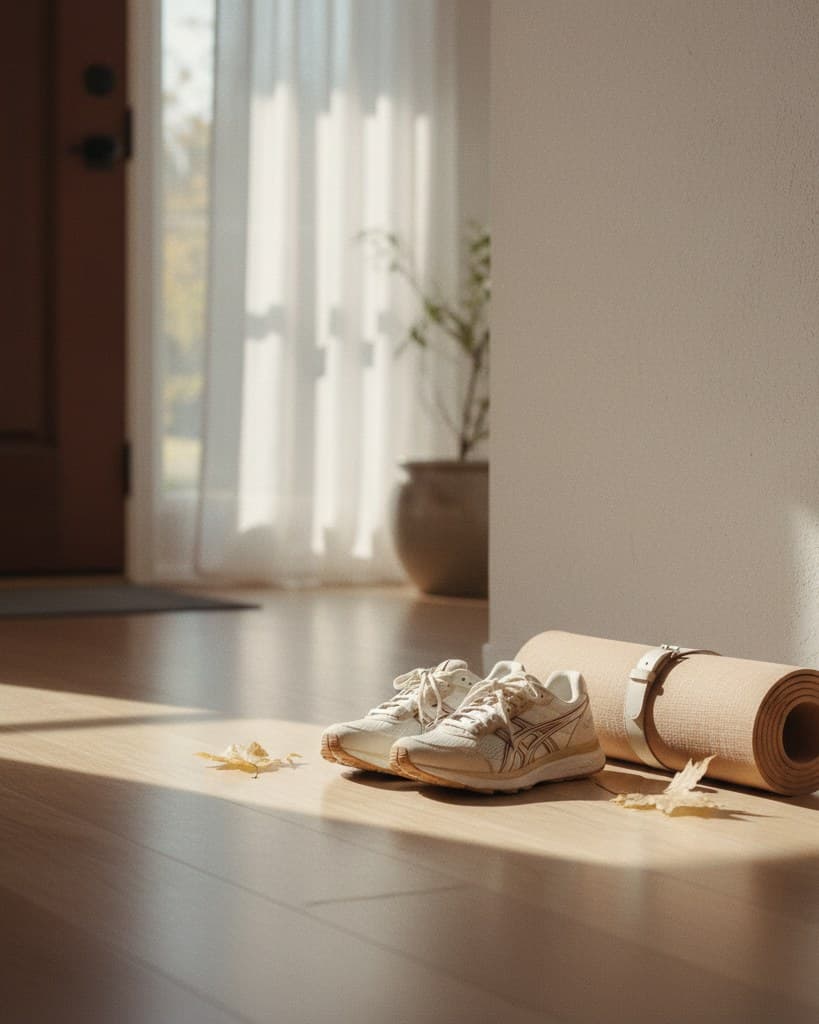
Reduce the friction between you and the habit. Lay your mat out the night before. Keep your trainers by the door. Set your workout clothes ready. Every small obstacle you remove makes it more likely you will follow through, and every cue you make visible nudges you towards it. We are far more influenced by our environment than we like to admit, so let yours do some of the work.
Expect to miss, and plan for it
You will miss days. Life will intervene, and that is not failure, it is normal. What separates a lasting habit from a broken resolution is the response to a missed day. The rule that helps most is simply this, never miss twice. One missed session is a blip. Two in a row is the start of a slide. Forgive the first, and make sure the next day you show up, even if only for the tiniest version of the habit.
Let go of all or nothing thinking entirely. A ten-minute session on a chaotic day is not a poor effort, it is a win that keeps the habit alive. Consistency, not intensity, is what reshapes your body and your life over time.
Let it grow on its own
The quiet magic is that once a habit is established, it stops requiring effort and starts requiring almost none. The ten minutes naturally stretches. The walk becomes something you miss when you skip it. Movement shifts from a thing you make yourself do into simply part of who you are.
This autumn, resist the urge to overhaul everything at once. Choose one small movement habit, anchor it, make it easy, and protect it gently. By the time the clocks change, it will not feel like a habit you are forcing. It will just feel like you.