Iron, Energy and You: Why So Many Women Feel Tired (and What Helps)
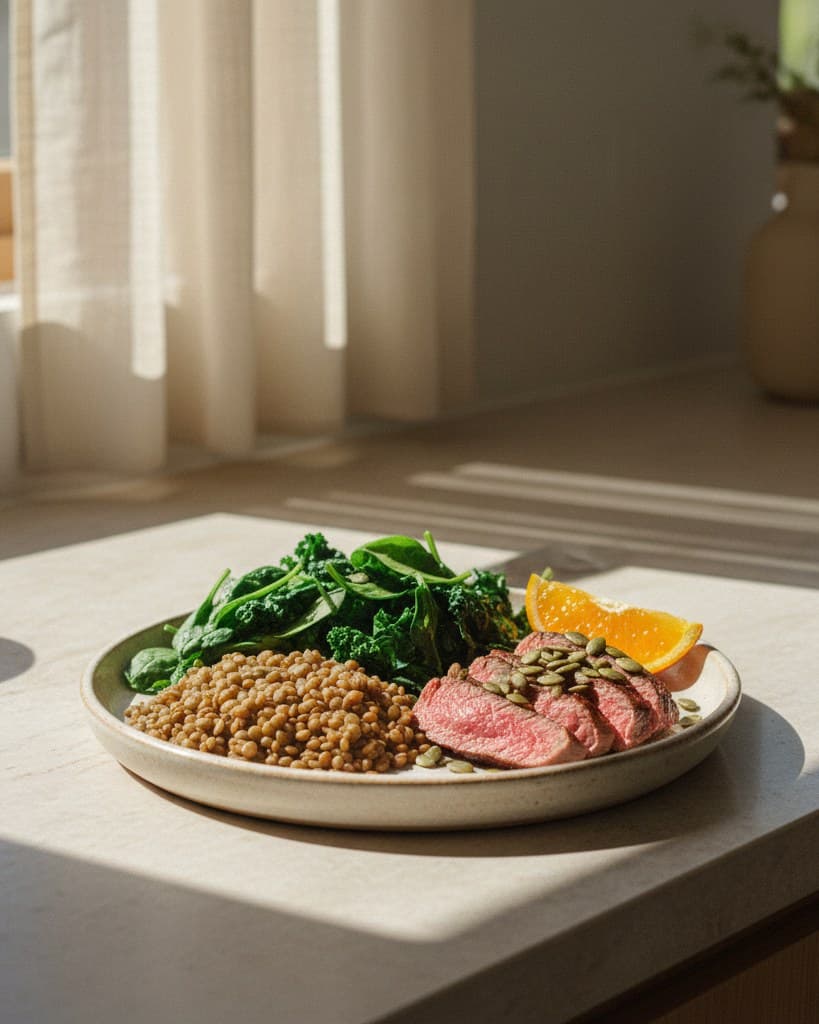
Persistent tiredness is incredibly common in women, and low iron is often part of the story. Here is what to know and the practical steps that help.
If you are a woman who feels tired more often than you would like, you are in very large company. Persistent tiredness is one of the most common reasons women see their GP, and while life is busy enough to explain a lot of it, there is sometimes a physical thread worth pulling. One of the most common is iron, a mineral that women are particularly prone to running low on, and one that affects your energy at the most fundamental level.
A clear note before we go further. This article is for understanding, not diagnosis. Tiredness has many causes, and only a blood test can tell you whether iron is part of your picture. If you are exhausted, please see your GP rather than guessing.
Why iron matters so much
Iron's headline job is to help your red blood cells carry oxygen around your body. Every cell needs oxygen to make energy, so when iron runs low, the whole system runs short of fuel. The result is a deep, particular kind of tiredness that sleep does not seem to fix, often alongside breathlessness on stairs, paleness, brittle nails, feeling cold, poor concentration and sometimes unusual cravings for things like ice.
When iron stores fall far enough, it becomes iron deficiency anaemia, one of the most common deficiencies in the world, and one that falls disproportionately on women.
Why women are especially prone
The main reason is monthly blood loss. Periods, particularly heavy ones, are a regular drain on iron stores, and many women lose more than they realise. Pregnancy raises iron needs sharply too, as does breastfeeding. Those following plant-based diets need to be a little more thoughtful, since the iron in plants is absorbed less easily than the iron in meat. Stack these factors and it is easy to see why so many women are quietly running low without knowing it.
What helps, practically
If a test confirms low iron, your GP will guide you, sometimes with supplements, which are effective but best taken on proper advice rather than self-prescribed, since too much iron causes its own problems.
Alongside that, food does real work. Iron comes in two forms. The kind in meat, especially red meat, is absorbed easily. The kind in plants, found in lentils, beans, tofu, leafy greens, wholegrains, nuts and seeds, is absorbed less readily but still valuable, particularly when you help it along.
That helping along is a useful trick. Vitamin C significantly boosts the absorption of plant iron, so pairing iron-rich plants with something like citrus, peppers, tomatoes or berries makes a genuine difference. A squeeze of lemon over your lentils, or fruit with your fortified breakfast, is a small habit with real payoff. On the other hand, tea and coffee hinder iron absorption, so it is worth leaving a gap between your cuppa and your iron-rich meals rather than having them together.
Look at the bigger picture too
Iron is one common thread, but it is not the only one. Heavy periods, low vitamin B12 or vitamin D, an underactive thyroid, poor sleep, stress and simply doing too much can all leave you flat, and they often overlap. This is exactly why a proper check-up matters, so you treat the real cause rather than chasing the wrong one.
The message underneath all of this is simple. Constant tiredness is common, but it is not something you should just accept as your lot as a busy woman. It is your body asking for attention. Listen to it, get the right tests, and take the practical steps, and that flat, foggy tiredness very often lifts in a way that reminds you what your normal energy actually feels like.