Mobility vs Flexibility: What's the Difference and Why You Need Both
Mobility and flexibility are not the same thing, and you need both to move well. Here is the difference explained simply, and how to train each one.
Mobility and flexibility get used as if they mean the same thing, but they do not, and understanding the difference is genuinely useful for how you move and feel. You can be very flexible and still move poorly, and you can be reasonably stiff yet move with control and strength. Knowing what each one is, and why you want both, helps you train in a way that actually translates into an easier, more capable body.
The simple distinction
Flexibility is how far a muscle can lengthen. It is passive, the range you can reach when something else does the work, like gravity pulling you into a forward fold or a hand drawing your leg towards your chest. It is about length.
Mobility is how well you can actively move a joint through its range, under your own control and strength. It is active, the range you can reach and own using your own muscles. It is about control as much as range.
A neat way to picture it. Flexibility is being able to lift your leg high when someone holds it there for you. Mobility is being able to lift and control that same leg to a useful height yourself. One is potential range, the other is range you can actually use.
Why flexibility alone is not enough
Here is the part that surprises people. Being very flexible is not automatically a good thing if you lack the strength to control that range. A flexible joint without the muscular control to manage it can actually be less stable and more prone to injury, because you can move into positions you cannot safely support. This is why some very bendy people are surprisingly injury-prone.
What you truly want is usable range, the ability to move freely and to control where your body goes throughout that movement. That is mobility, and it is what makes real life feel easier, reaching, squatting, twisting, lifting, all with control and without strain.
Why mobility matters for daily life
Mobility is what lets you move through the world comfortably. Squatting down to a low cupboard, reaching overhead, turning to check your blind spot, getting up off the floor with ease. These everyday movements need joints that can move well and muscles that can control them. As we age, it is often mobility, not flexibility, that quietly determines how independent and capable we stay.
Good mobility also protects you. Joints that move well through their range, supported by strength, handle the demands of life and exercise far better than stiff ones or unstable, overly loose ones.
How to train both
Flexibility responds to stretching, holding a lengthened position to gradually increase how far a muscle reaches over time. There is a place for this, especially gentle stretching to ease tension and improve range.
Mobility needs something more active. It is trained by moving joints deliberately through their full range, under control, and by building strength at the very ends of that range where you are usually weakest. This is exactly the kind of work Pilates does so well, combining movement, control and strength through a full and intentional range rather than just lengthening muscles passively.
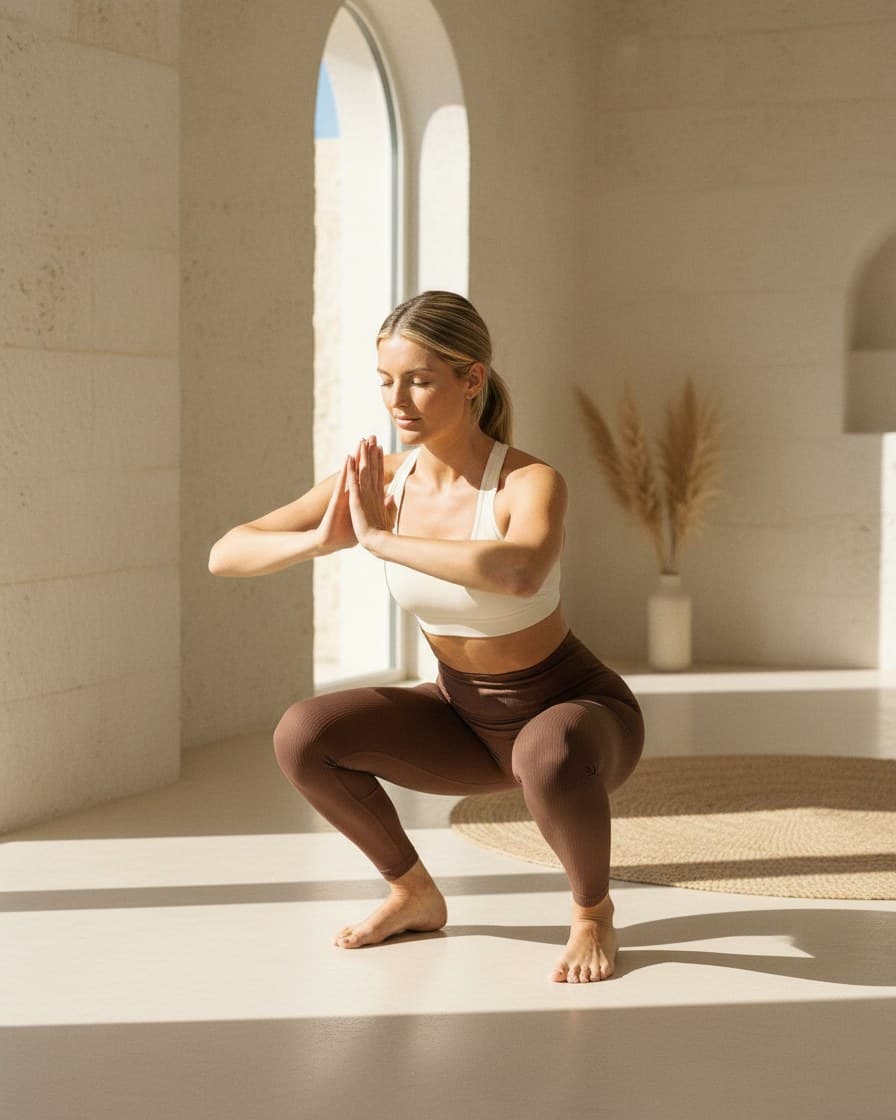
In practice, a good routine includes both. Active mobility work, slow controlled movements through full ranges, deep supported squats, controlled spinal rotations, plus some gentle stretching to keep muscles supple. Together they give you a body that is both free to move and strong enough to control that movement.
The takeaway
Do not chase flexibility for its own sake, as if touching your toes were the goal. Aim instead for mobility, the freedom to move well and the strength to control it. That combination is what keeps you moving comfortably and confidently through your days, now and for the long run. Train your body to own its range, not just to reach it.