Strong Glutes, Happy Back: A Beginner's Guide to Posterior Chain Training
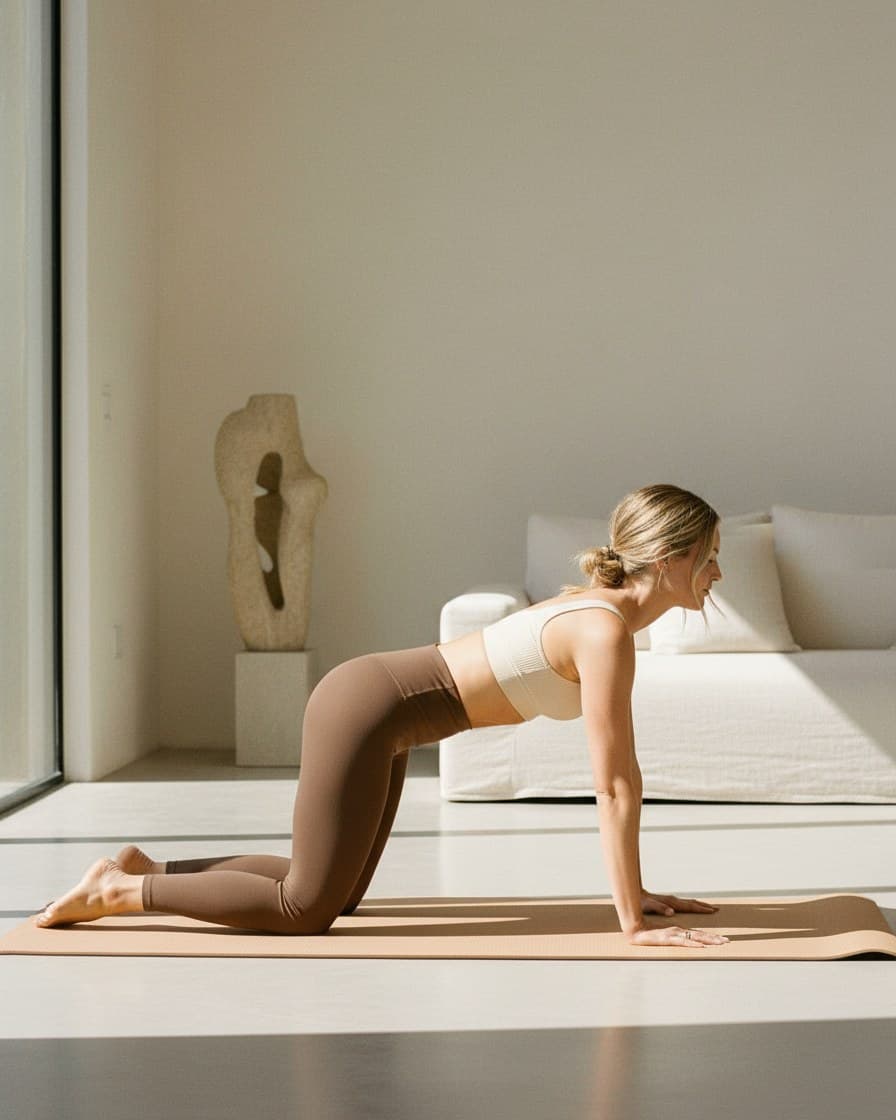
Weak glutes are behind a surprising amount of back ache. Here is a beginner-friendly guide to training your posterior chain for a stronger, happier back.
If your lower back nags at you by the end of the day, the culprit might be somewhere you would not think to look. It is often not the back itself that is the problem, but the muscles that are meant to support it and have quietly switched off. Chief among them are your glutes, the largest, most powerful muscles in your body, and ones that modern life leaves badly underused.
This is the case for training your posterior chain, the line of muscles running up the back of your body from your calves through your hamstrings, glutes and back. Strengthen it, and a surprising number of everyday aches tend to ease.
Why sitting is the quiet villain
When you sit for hours, your glutes are switched off and lengthened while the muscles at the front of your hips shorten. Over months and years this creates a body that has, in effect, forgotten how to use its most powerful muscles. The technical phrase is gluteal amnesia, and the everyday result is that smaller muscles, including those in your lower back, end up doing work they were never designed for. They get overloaded, and they complain.
Waking the glutes back up takes the pressure off your back, improves your posture and gives you real, usable strength for lifting, climbing stairs and simply standing tall.
The beginner's posterior chain
You do not need a gym or heavy weights to start. You need to reconnect with these muscles and teach them to fire again.
Begin with the glute bridge. Lying on your back, knees bent, feet flat, press through your heels and lift your hips, squeezing your glutes at the top. The key is to feel the work in your glutes rather than your lower back. This single move is the foundation, and many people are surprised how much they feel it.
Add the hip hinge. Standing tall, push your hips back as if closing a car door with your bottom, keeping a soft bend in the knees and a long, flat back, then drive your hips forward to stand. This teaches the hinge pattern that protects your back when you bend and lift in real life. Practise it slowly and with control.
Bring in single-leg work as you progress, like a step-up or a single-leg bridge, which exposes the side that has gone lazy and evens you out.
Form over everything
The whole point of this work is undone if your back muscles take over. Move slowly, keep your core gently engaged, and focus on actually feeling your glutes do the lifting. A few controlled reps where you feel the right muscles working beats a long set done on autopilot. If you cannot feel your glutes at all, start with the bridge and really pause at the top, squeezing deliberately.
A little goes a long way
Two or three short sessions a week is plenty to start seeing a difference. Within a few weeks, many people notice they sit and stand more easily, their back feels more supported, and they simply feel sturdier. This is functional strength, the kind that makes daily life feel lighter rather than just looking good in the mirror.
Your glutes are not a vanity muscle. They are the engine room of your body, and a happy back so often begins with waking them back up. If you have existing back pain or an injury, check in with a physio before you begin, so your programme fits your body. Then start gently, stay consistent, and let your strongest muscles get back to the job they were built for.