Protein for Women: How Much You Actually Need and Easy Ways to Hit It
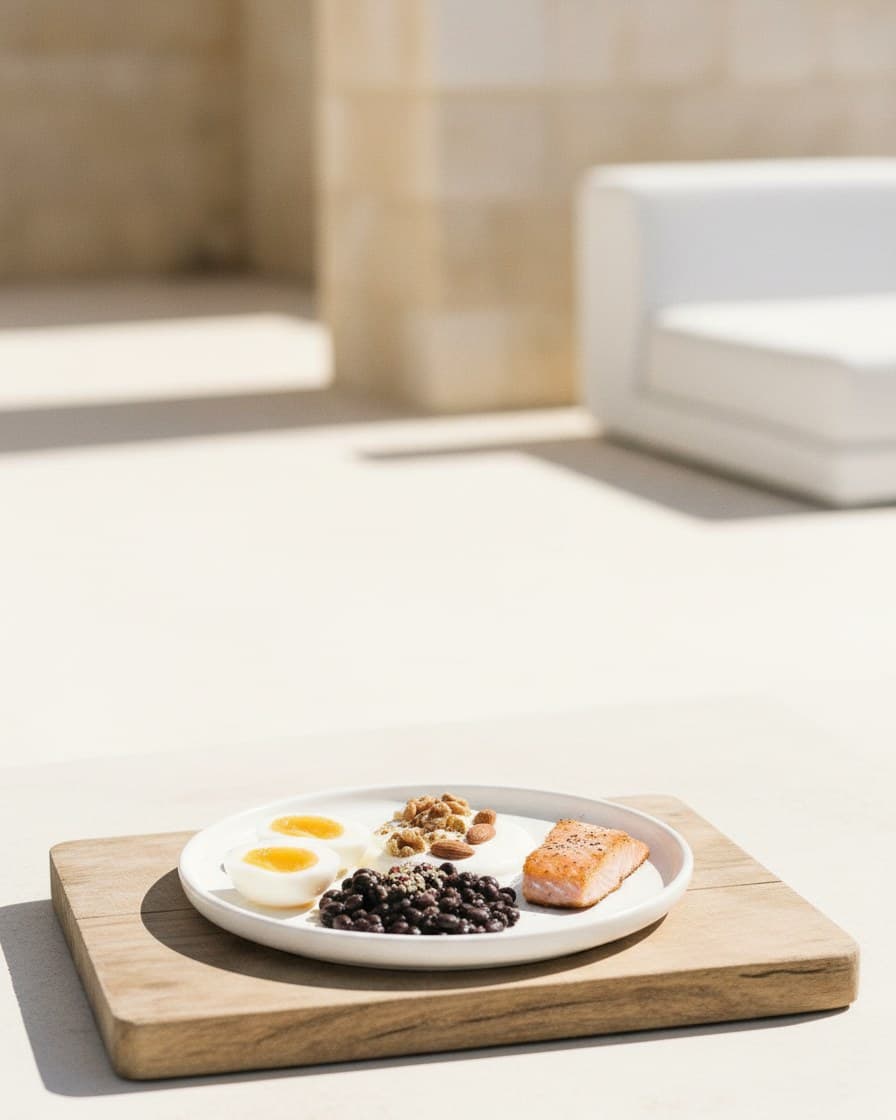
Protein matters more than many women realise, especially for strength and ageing well. Here is how much you really need and simple ways to get there.
Protein has had a moment, and for women in particular it is a conversation worth having properly. For years the focus was on eating less, and protein got lumped in with everything to be cautious about. We now understand that many women are quietly under-eating protein, and that getting enough is one of the simplest, most powerful things you can do for your strength, your energy and how well you age.
Why protein matters more than you might think
Protein is the building block your body uses to maintain and repair muscle, but its job goes far beyond the gym. It keeps you fuller for longer, which steadies your energy and your appetite. It supports your hair, skin, nails and immune system. And crucially, it helps you hold on to muscle as you get older, which protects your strength, your metabolism and your independence in later life.
That last point matters especially for women. From around your forties, muscle becomes harder to maintain, and the drop in oestrogen around menopause speeds the loss. Eating enough protein, paired with strength work like Pilates, is one of the best defences you have for staying strong and capable for decades.
How much you actually need
The old baseline guideline of around 0.8 grams of protein per kilogram of body weight is really the minimum to avoid deficiency, not the amount to thrive on. Most experts now suggest active women aim higher, somewhere in the region of 1.2 to 1.6 grams per kilogram, and a little more again if you are very active or post-menopausal.
In practical terms, for many women that lands somewhere around 80 to 110 grams a day. It sounds like a lot until you see it spread across your meals, and the easiest way to hit it is to stop leaving protein as an afterthought.
The easy way to get there
The single most effective habit is to anchor every meal with a protein source, rather than building meals around carbohydrates and hoping protein turns up. Ask of each plate, where is my protein, and the total takes care of itself.
Breakfast is where most women fall short. A bowl of cereal or toast has very little protein, leaving you hungry by eleven. Swapping to eggs, Greek yoghurt with nuts and seeds, or a protein-rich smoothie can add twenty or more grams before the day has properly begun, and it changes how the whole morning feels.
Lean on a wide range of sources. Eggs, fish, chicken, Greek yoghurt and milk are protein-dense, and so are plant sources like beans, lentils, tofu, edamame and a good handful of nuts and seeds. Mixing animal and plant sources gives you protein and the plant variety your gut loves at the same time.
If you struggle to hit your target from food alone, a simple protein supplement in a smoothie is a convenient, perfectly reasonable top-up, not a compromise.
Spread it through the day
Your body uses protein best when you spread it across your meals rather than saving it all for dinner. Aim for a decent portion at each meal, roughly twenty to thirty grams, and you will absorb it more effectively and stay fuller throughout the day.
This is not about chasing a number obsessively or turning eating into a maths exercise. It is about recognising that protein has probably been the missing piece, and that nudging it up, especially at breakfast, can leave you stronger, steadier and far better fuelled for the active life you want to live.